Registration Feels Scary Until You Actually Do It
Ask anyone who’s started a business in India, and most will tell you the paperwork felt more intimidating in their head than it actually turned out to be. Learning how to register a business in India is genuinely a manageable process now, especially with most of it moved online through the MCA and GST portals.
I’ve helped a couple of first-time founders through this, and the biggest issue was never the actual process — it was procrastinating because they assumed it would take weeks of running between offices.
Decide Your Business Structure First
Direct answer: Before you register anything, you need to pick a legal structure — sole proprietorship, partnership, LLP, or private limited company — since the entire registration process, paperwork, and compliance requirements depend entirely on this one decision.
A single freelancer doesn’t need the same structure as a startup planning to raise investment. Get this wrong early, and you’ll likely be re-registering within a year.
Documents You’ll Need Ready
Before you even open the MCA portal, keep these handy:
- PAN card and Aadhaar of all directors/partners
- Address proof of the registered business location
- Passport-size photographs of all directors
- A digital signature certificate (DSC) for at least one director
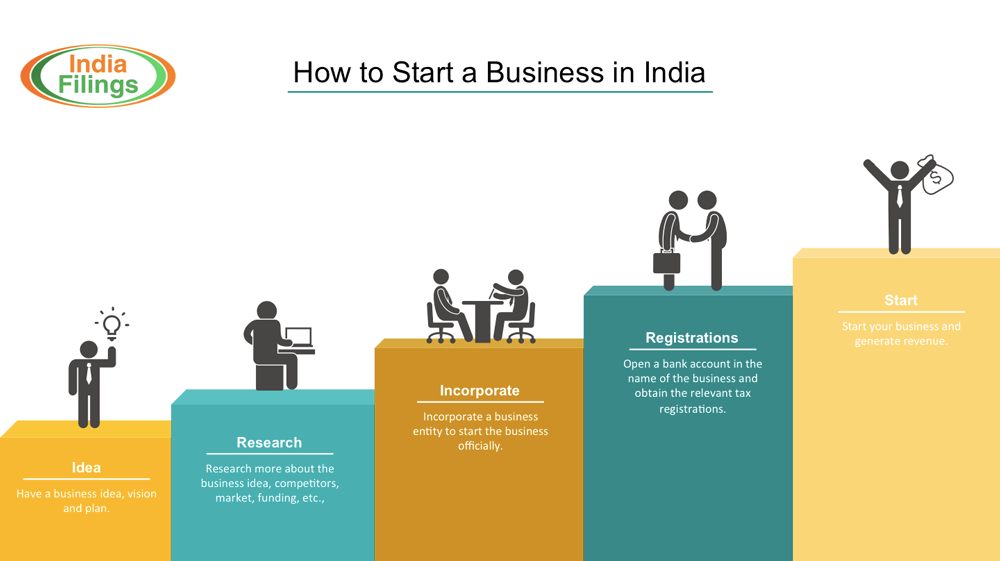
The Actual Registration Steps
- Apply for a Digital Signature Certificate (DSC) — takes 1-2 days typically
- Reserve your company name via the RUN (Reserve Unique Name) service on the MCA portal
- File the SPICe+ form with company details, director details, and registered office proof
- Receive your Certificate of Incorporation along with PAN and TAN, usually within 7-10 working days
[link to related guide on business structure comparison here]
Don’t Forget GST Registration
If your expected turnover crosses ₹40 lakh (₹20 lakh for services in most states), GST registration becomes mandatory. Even below this threshold, many small businesses register voluntarily because it makes B2B transactions and credit claims much smoother.
Open a Business Bank Account Right Away
Mixing personal and business finances is one of the most common mistakes new owners make. Once you have your incorporation certificate and PAN, open a dedicated current account — it makes accounting, taxes, and loan applications far cleaner later.
Register for Any Industry-Specific Licenses
Depending on your business type, you might also need FSSAI (food), trade license from your local municipal body, or Shop and Establishment registration. Skipping these can lead to fines later even if your core company registration is complete.
Budget for the Actual Costs
Registering a private limited company typically costs anywhere from ₹6,000 to ₹15,000 including government fees and professional charges, depending on your state and whether you hire a CA or CS to handle the filing.
Suggested image alt text: “entrepreneur filing business registration documents online in India”
FAQ
Q: How long does it take to register a business in India? Most private limited company registrations complete within 7-10 working days if all documents are in order, though delays happen if name approval or DSC issuance takes longer.
Q: Do I need a lawyer to register my business in India? Not strictly, though most founders use a CA or company secretary to avoid errors in the SPICe+ filing process.
Q: What is the cheapest way to register a business in India? Sole proprietorship is the cheapest and simplest, requiring minimal registration compared to LLP or private limited structures.
Q: Can I register a business from home without a commercial office? Yes, many small businesses register using their home address as the registered office, provided proper address proof is submitted.
Q: Is GST registration mandatory for all new businesses? No, it’s mandatory only above certain turnover thresholds, though many businesses register voluntarily for B2B credibility.
Conclusion
Knowing how to register a business in India removes one of the biggest early hurdles founders face — and honestly, it’s far less painful than most people assume once you break it into steps. Pick your structure, gather your documents, and file through the MCA portal methodically. If you’ve been putting this off, block out one afternoon this week to actually get your DSC application started.