
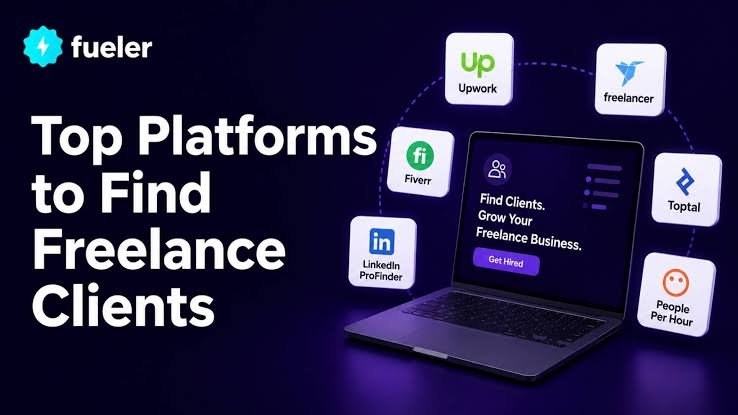
You spend hours crafting the perfect proposal, only to see a client accept another bid that undercut yours by 80%. This is the reality on the wrong platforms — but it doesn’t have to be your entire freelancing experience. Some of the best platforms for freelancers are specifically built to attract quality clients who value skill over the cheapest price, and knowing where to focus your energy can completely change your income trajectory. This guide covers the platforms actually worth your time in 2026, along with how to position yourself to win higher-paying work on each one.
Why Platform Choice Matters More Than Effort Alone
Many freelancers pour huge effort into proposals on platforms flooded with race-to-the-bottom pricing, then wonder why they’re not getting anywhere. The client pool on a platform matters as much as your own skill and pitch.
Choosing among the best platforms for freelancers based on your niche and experience level is often the single biggest lever for increasing your average project value.
Upwork — Best for Volume and Long-Term Client Relationships
Upwork remains one of the largest freelance marketplaces, and while it does have plenty of low-budget work, it also has a substantial pool of serious, recurring clients if you position correctly.
Featured Snippet Answer: Upwork works best for freelancers who focus on a specific niche, build a portfolio with real results (not just deliverables), and target long-term contracts rather than one-off gigs. Freelancers who specialize tend to earn significantly more than generalists competing on price alone.
Tips to win better clients here:
- Complete your profile 100%, including a portfolio with measurable results
- Apply to fewer, highly-relevant jobs with personalized proposals instead of mass-applying
- Prioritize long-term contract postings over one-time gig listings
Toptal — Best for High-End, Vetted Freelance Work
Toptal has a strict vetting process, but this is exactly why the client budgets tend to be significantly higher than open marketplaces.
- Best suited for experienced developers, designers, and finance professionals
- The application process is rigorous, often including skill tests and interviews
- Once accepted, clients are typically pre-vetted for serious budgets, reducing time wasted on low-quality leads
[link to related guide about how to set freelance rates here]
Contra and Braintrust — Commission-Free Alternatives
Newer platforms like Contra and Braintrust have gained traction by offering commission-free models, meaning freelancers keep more of what they earn compared to traditional marketplaces.
Featured Snippet Answer: Contra and Braintrust are commission-free freelance platforms, meaning freelancers keep 100% of their earnings instead of the marketplace taking a percentage cut. This makes them attractive alternatives to Upwork and Fiverr, particularly for freelancers with an established portfolio who don’t need heavy platform-driven lead flow.
LinkedIn — Best for Direct Outreach to High-Paying Clients
Many top freelancers skip marketplaces entirely and use LinkedIn to directly reach decision-makers, which typically results in higher project values than marketplace bidding.
- Optimize your profile headline around the specific outcome you deliver, not just your job title
- Post case studies and results regularly to build visible authority in your niche
- Send personalized connection requests to potential clients instead of cold, generic pitches
[link to related guide about content marketing strategy for beginners here]
Niche-Specific Job Boards
General marketplaces are crowded; niche job boards specific to your industry often have far less competition and higher-quality clients.
- For writers: ProBlogger Job Board, Contena
- For designers: Dribbble Jobs, We Work Remotely
- For developers: Remote OK, AngelList (Wellfound)
Freelancers who focus energy on niche boards relevant to their specific skill often report fewer but noticeably higher-value leads than broad marketplaces.
Referral Networks and Freelancer Communities
Some of the highest-paying freelance work never gets posted publicly — it moves through referrals within tight-knit professional communities.
- Join niche Slack or Discord communities related to your field
- Build genuine relationships with other freelancers who can refer overflow work
- Ask happy past clients directly for referrals — this is consistently one of the highest-converting client sources for experienced freelancers
How to Stand Out Regardless of Platform
Beyond choosing the right platform, positioning yourself well is what actually wins higher-paying clients consistently.
- Lead with specific, measurable results in your portfolio, not just a list of services
- Write proposals that reference the client’s specific problem, not a generic template
- Charge confidently based on value, and avoid competing purely on lowest price
FAQ
Which freelance platform pays the most? Toptal and direct client outreach via LinkedIn tend to result in the highest average project values, though they require stronger positioning and often a vetting process.
Are commission-free platforms like Contra actually better for freelancers? Financially, yes, since freelancers keep 100% of earnings — but they typically have smaller client pools than established marketplaces like Upwork, so lead volume can be lower initially.
Is Upwork still worth it in 2026 with so much competition? Yes, if you specialize in a niche and target long-term contracts rather than competing broadly on price against every other freelancer on the platform.
Should I rely only on freelance platforms, or also pursue direct outreach? A mix works best — platforms provide steady lead flow, while direct outreach and referrals typically bring in the highest-value, most stable long-term clients.
How important is a portfolio for winning high-paying freelance clients? Extremely important — a portfolio showing measurable results (not just finished deliverables) is one of the strongest differentiators between freelancers competing for the same client.
Do niche job boards really have less competition than big platforms? Generally yes — because they’re less well-known, fewer freelancers apply, which often means better odds of standing out for genuinely relevant opportunities.
Conclusion
Finding the best platforms for freelancers isn’t just about signing up everywhere — it’s about matching your niche and experience level to the right client pool. Upwork and niche job boards work well for building momentum, Toptal and Braintrust suit more established freelancers, and LinkedIn outreach often delivers the highest-value direct relationships. Whatever platform you choose, lead with measurable results and personalized pitches instead of competing on price. Pick one platform from this list that fits your niche, optimize your profile this week, and commit to a focused approach instead of spreading thin across five platforms at once.